
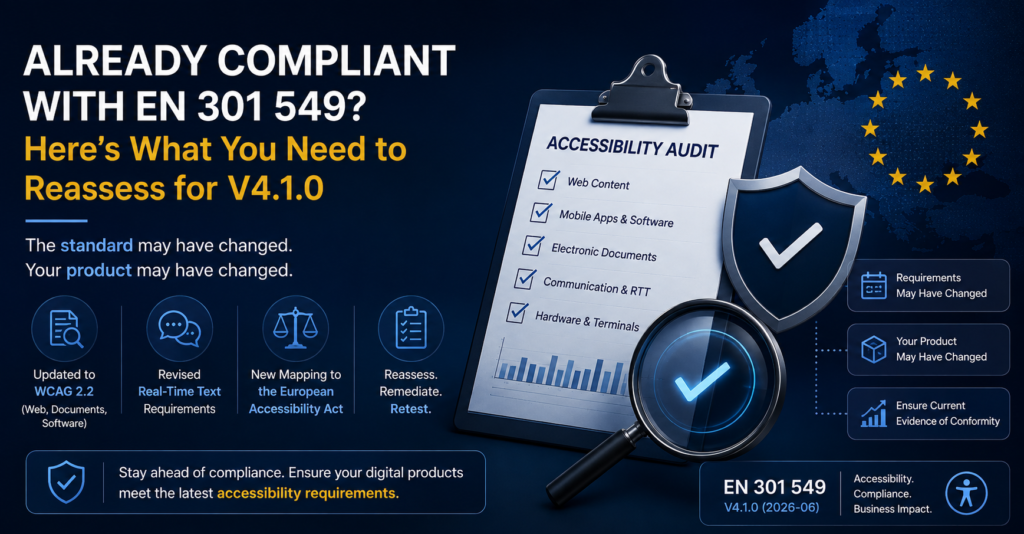
Already Compliant with EN 301 549? What to Reassess for V4.1.0
September 9, 2026
Your organization completed an accessibility audit. Issues were fixed and perhaps you also have an accessibility conformance report. Does that mean you are covered under EN 301 549 V4.1.0? Not necessarily. There are two important reasons: The standard may have changed. And your product may have changed. Here is what organizations should consider reassessing. 1. […]
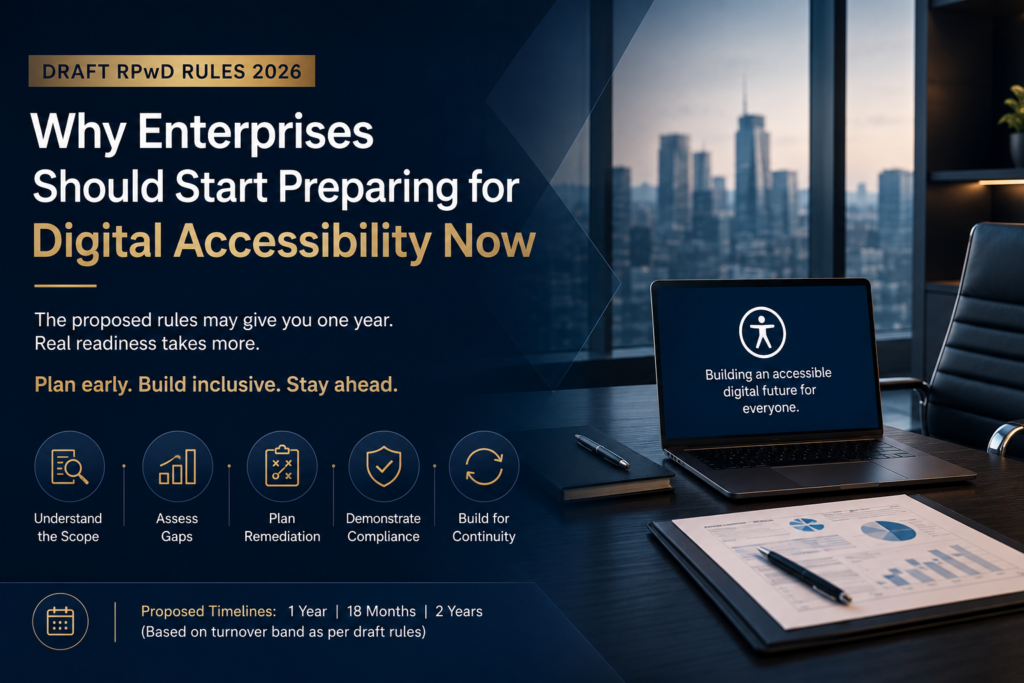
Draft RPwD Rules 2026: Why Enterprises Should Start Preparing for Digital Accessibility Now
September 2, 2026
For many organisations, digital accessibility has historically competed with multiple technology and compliance priorities. A website redesign needs to go live. A new mobile application is being launched. Security vulnerabilities require immediate attention. Regulatory requirements have deadlines. Product teams have their own roadmaps. Accessibility, therefore, can sometimes get pushed to the next release or the […]
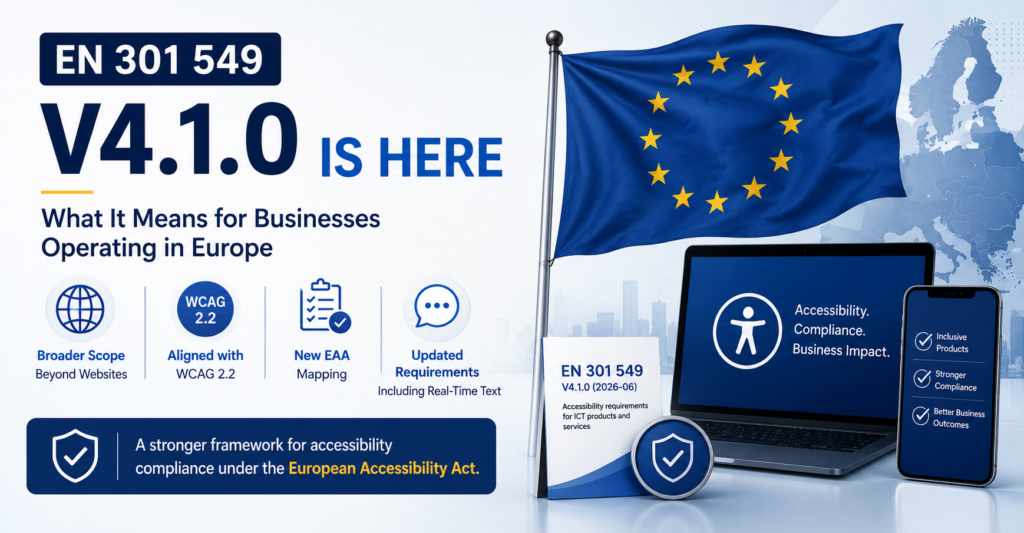
EN 301 549 V4.1.0: What Businesses Need to Know
August 31, 2026
If your organization offers digital products or services in Europe, accessibility increasingly needs to be part of your compliance, product, and technology roadmap. The final draft of EN 301 549 V4.1.0, published in June 2026, updates Europe’s accessibility standard for ICT products and services. Importantly, this version has been prepared to provide a voluntary means […]
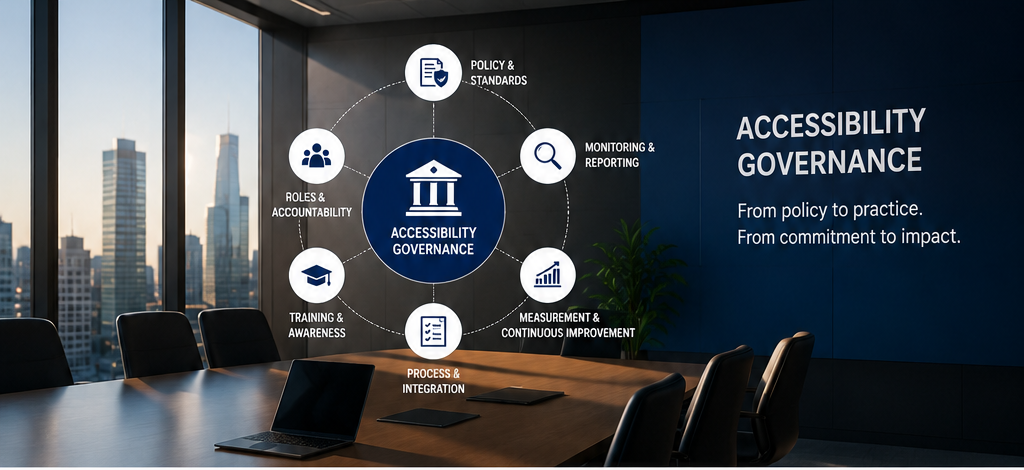
From Accessibility Compliance to Accessibility Governance
August 28, 2026
Building an enterprise capability, not just checking a box. Most organisations think of accessibility as a compliance exercise—run an audit, fix the issues, and move on. While compliance is a necessary step, it is not enough to create inclusive digital experiences at scale. The real shift happens when accessibility moves from a one-time activity to […]

Digital Accessibility in the Enterprise: Who Owns It?
August 26, 2026
Digital accessibility is often treated as a technology issue. In some organisations, it sits with the UX team. In others, it is assigned to IT, QA, compliance or DEI. The reality is simpler: digital accessibility cannot be owned effectively by a single function. For enterprises, accessibility is a business responsibility that requires clear leadership, cross-functional […]
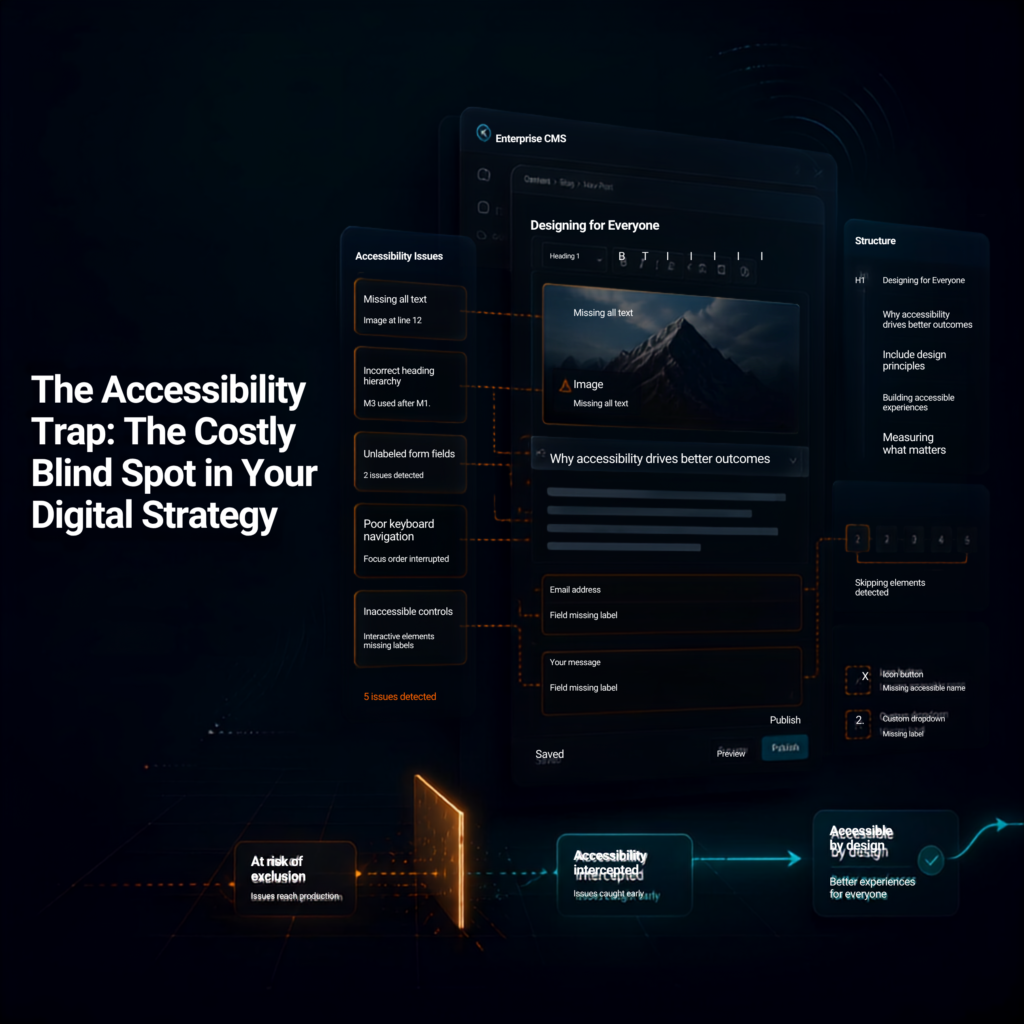
The Accessibility Trap: How ATAG Prevents Costly Accessibility Issues
August 14, 2026
By Disha Over the past three years of auditing digital products, I have witnessed the same story unfold across organizations of every size. But over the last year, the story has taken on a new urgency. I’ve been working closely with businesses that are completely new to digital accessibility. Most of them didn’t begin this […]
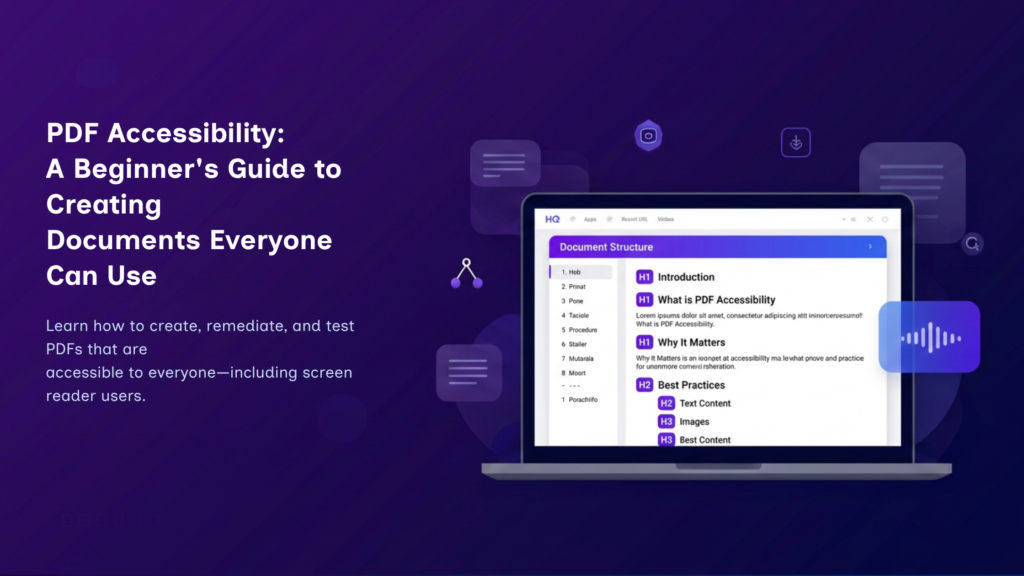
PDF Accessibility: A Beginner’s Guide to Accessible PDFs
August 9, 2026
By Manikanta If you’ve ever downloaded a document from a website, filled out an application form, or read an eBook, chances are you’ve used a Portable Document Format (PDF)—one of the world’s most widely used file formats. PDFs preserve a document’s layout, fonts, images, and formatting, ensuring that it appears consistently across different devices and […]
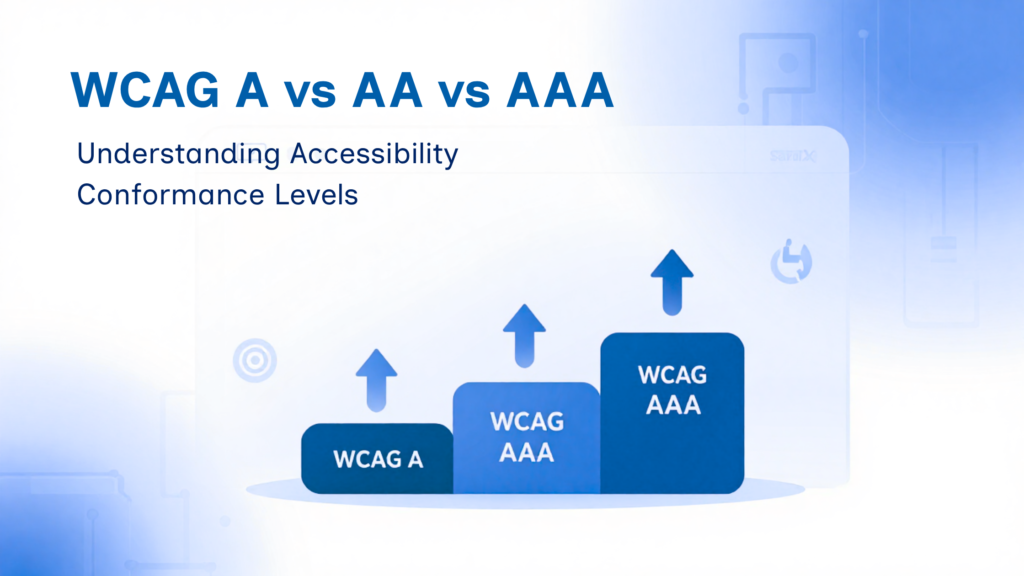
WCAG A vs AA vs AAA: Understanding Accessibility Conformance Levels
July 25, 2026
By Shubham, SaralX If you’re building a website or web application and starting to explore accessibility, you’ve probably come across the terms WCAG Level A, AA, and AAA. It’s easy to get confused by them at first. Does achieving Level AAA mean your website is suddenly perfect? Is Level A too basic to matter? And […]
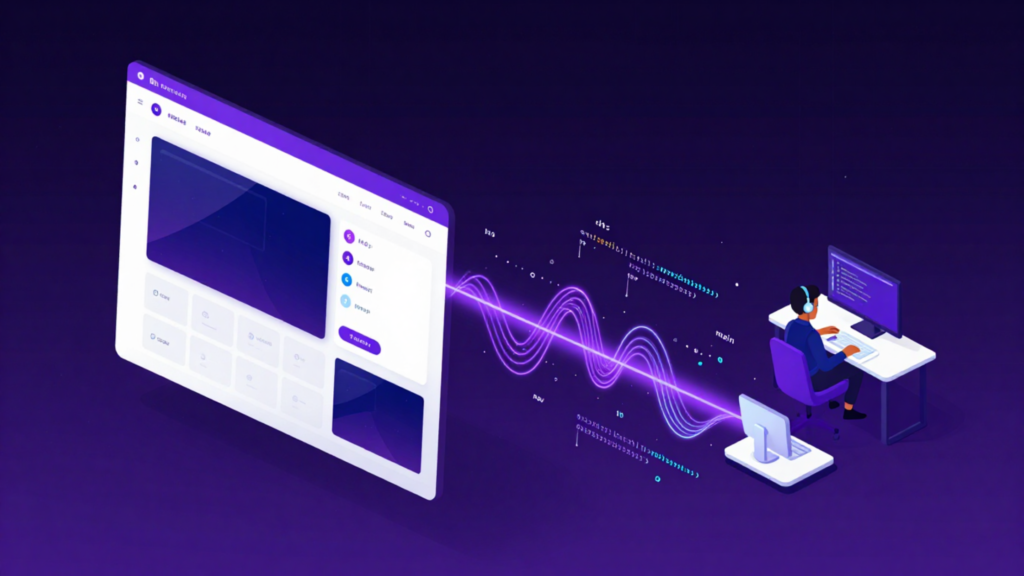
Your Code Talks to Screen Readers: A Developer’s Guide to Building Accessible Websites
July 23, 2026
By Shraddha, SaralX Modern websites are built to be visually appealing, interactive, and responsive. But for millions of people who rely on screen readers, a website isn’t experienced through its design—it’s experienced through its code. Every heading, button, form field, image, and link communicates through HTML and accessibility semantics. That means developers play a critical […]
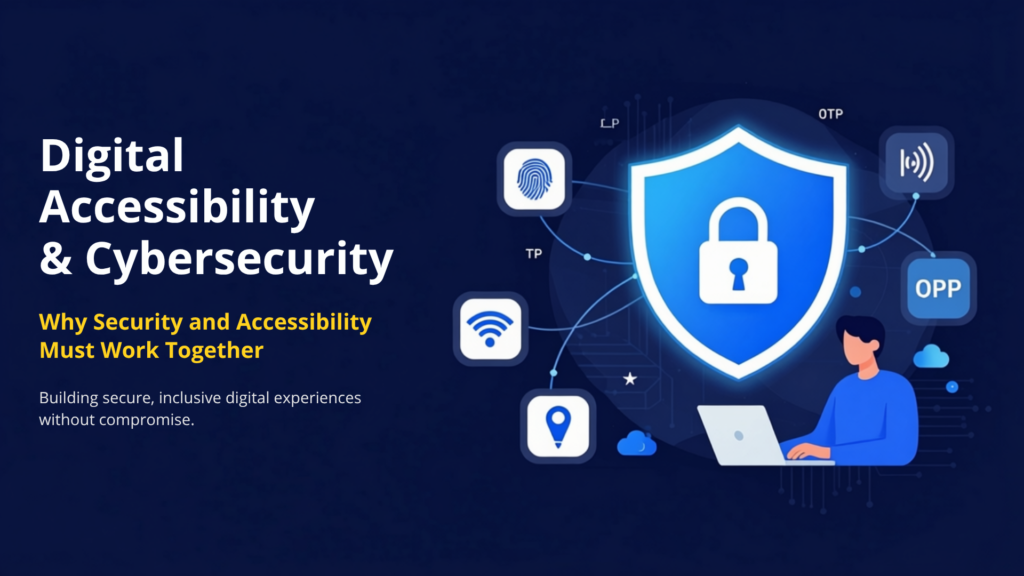
Digital Accessibility & Cybersecurity
July 21, 2026
By Dheeraj Imagine This… A visually impaired customer wants to log in to their banking application. The app sends a One-Time Password (OTP) to their registered email address. Unlike an SMS, there is no automatic OTP detection. The user switches to their email app, navigates through multiple messages using a screen reader, locates the latest […]